
Version: 0.6.22
How to Design Algorithms?#
- Lecture:
Lecture 10.1
(slides)- Objectives:
Understand the “methodology” to approach computational problems
- Concepts:
Brute force, divide-and-conquer, greedy, randomization, design method
Note
This lecture is optional, and it is not part of the exam. It is about what to do after the course.
We have covered many algorithms in this course, and yet we have only scratched the surface. Tomorrow, you will meet a problem that none of us has seen. What will you do?
The good news is that most algorithms are built from a handful of ideas, and that you have already met all of them. This last lecture names them, and then adds a few questions to ask yourself when facing a new problem.
Four Ideas#
Brute force: Try everything. The simplest idea is to try all the possible solutions, and keep the one that works. It is always correct, it is easy to write, and it is a baseline to measure everything else against. We used it for the linear search, for the selection sort, and for the combinatorial search, where we also saw how to prune the tree to avoid trying everything. Its weakness is the time, which explodes with the size of the problem.
Divide-and-conquer: Split the problem. Break the problem into smaller problems that look like the original, solve each one recursively, and merge the results. The binary search splits the array in two and keeps only one half. The merge sort splits the array in two, sorts each half and merges them. The quick sort does the same, with a different split. Many of the best algorithms of this course are of this kind.
Greedy: Make the best move now. At each step, take the choice that looks best at that point in time, and never go back. Prim’s algorithm adds the cheapest edge that reaches a new vertex, and Dijkstra’s algorithm expands the most promising path so far. A greedy algorithm is fast and simple, but it is only correct if the best move now leads to the best result in the end, which has to be proved for each problem. In the optimization module, the hill climbing was also greedy, and we saw where it gets stuck.
Randomize: Pick a move at random. Sometimes a random choice is better than a clever one. The quick sort picks its pivot at random, so that no input is systematically bad for it. And the random walk and the simulated annealing of the heuristic search use luck to escape the traps that a purely greedy strategy falls into.
And of course there is dynamic programming, which you can see as a brute force that never solves the same sub-problem twice, or as a divide-and-conquer that remembers its results.
None of these ideas is a recipe that always works. But when you are stuck, run through them, and ask which one fits your problem.
Facing a New Problem#
Beyond the ideas, there is a method. Here are the questions I ask myself, in this order (Fig. 45).
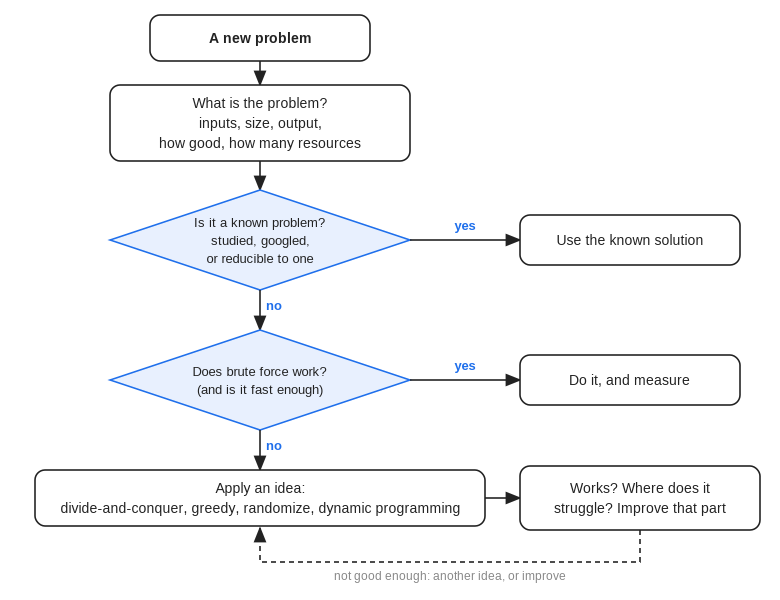
Fig. 45 A way to approach a new problem.#
What is the problem? Before anything else, make sure you understand it. What are the inputs, and how big can they be? What is the expected output, and how good does it have to be: The best solution, or a good one? What type of problem is it? And how many resources do you have, in time, in memory and in money? A few minutes spent here save days later.
Is it a known problem? Have you studied it? Have you searched for it on the Web? Can you reduce it to a known problem, as we did with the Sudoku and the graph coloring in the lecture on complexity classes? If so, you may inherit a solution, or a warning that no efficient solution is known.
Looking for a solution. Does the problem have a solution at all? Can you reach one by brute force, and is it fast enough? If it is, you are done, so measure and move on. If it is not, which of the four ideas would help? And once you have a solution that works, there is still the question: Where does it struggle? Can I improve on this very aspect? Do not improve what is already good enough.
What We Did Not Cover#
A bachelor course has to choose, and a lot was left out. If you want to go further, here are four directions, each with a place to start. None of it is needed for the exam.
Other data structures. Ours forget the previous version when they are updated, and they assume that every memory access costs the same. A persistent data structure keeps all its versions, which is the idea behind functional programming and version control. A cache-friendly one is laid out in memory so that the computer reads it fast, and a real computer can be many times faster with the same
O(n). A probabilistic one trades a little accuracy for a lot of space.Distributed and concurrent algorithms. What happens when many computers or many threads work together, and share data? Then we need to talk about distributed computing, locks, and lock-free algorithms.
Online algorithms. We always knew the whole input in advance. An online algorithm must decide before it sees the rest, as a cache that must choose what to evict without knowing what will be asked next.
Digging into a direction. Each module of this course opens a field of its own: network flows for graphs, linear programming and approximation algorithms for optimization, cryptography for the algorithms behind secure communication, and many more.
Preparing for a Tech Interview#
Many of you will, soon, apply for an internship or a job, and will go through a technical interview. Here is what to expect.
The process usually starts with a screening, often an online test, that checks your programming fluency, and how fast you are. It is a cheap filter, which removes the candidates who cannot program. Practice the basics until they are easy: Arrays, strings, loops, recursion, and the data structures of this course.
Then comes the technical interview, with an engineer. It is not an exam. They want to know how you communicate, how you think, and how you solve a problem. They are not looking for a guru, but for a professional, with whom they would like to work.
So talk. Ask questions about the problem, as in the first step above. Start with the simplest solution, even a brute force one, and say that it is naive. Check it on an example. Then say how you would improve it, and try. The questions of the previous section are your script, and the principle of this course, clear and correct before clever, is what they are hoping to see.